


The Art of the Perfect Bounce: Why Rhythm Platformers Are So Addictive
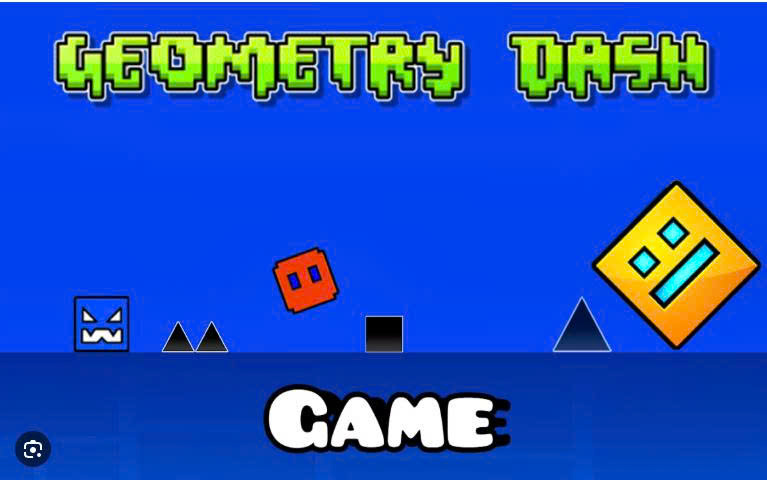
There is a specific feeling you get when everything clicks into place. It’s that moment in a game where your brain shuts off its logical processing center and enters a state of pure flow. The music swells, the colors flash in sync with the beat, and your fingers tap the screen or keyboard with military precision. You aren't just playing a game anymore; you are reacting to sound and light in real-time.
For many gamers, this "flow state" is the holy grail, and few genres capture it quite like the rhythm-based platformer. While the concept of jumping over obstacles sounds deceptively simple—something Mario has been doing since the 80s—modern games have transformed this basic mechanic into an art form. It’s no longer just about clearing a gap; it’s about clearing a gap at the exact millisecond a bass drop hits.
If you are looking to dive into this high-octane world, there is one title that stands as the undisputed king of the genre. It’s a game of squares, spikes, and incredible soundtracks. Let's talk about how to master the "geometry jump" by looking at the phenomenon that is Geometry Dash.
The Core Gameplay: More Than Just Jumping
At first glance, the gameplay loop seems almost too simple to be engaging. You control a small icon—usually a square—that moves automatically from left to right. Your only input is to jump. If you hit a spike, you restart. If you hit a wall, you restart. It is a binary system: you either succeed perfectly, or you fail completely.
However, calling it "just jumping" is like saying playing the piano is "just pressing keys." The complexity comes from the level design and the physics. In Geometry Dash, the game constantly reinvents itself as you play. One moment you are a cube hopping over spikes, and the next, you pass through a portal and transform into a rocket ship that requires you to hold the button to fly up and release to drop down. A few seconds later, you might become a jagged wheel that rolls along the floor and ceiling, reversing gravity with every tap.
The brilliance lies in the synchronization. Every obstacle is placed with musical intent. A triple-spike trap usually corresponds to a stutter in the beat; a long flight section matches a soaring melody. You aren't just looking at the screen; you are listening for cues. Experienced players often say they can play levels with their eyes closed once they know the song well enough because the rhythm dictates the movement.
This creates a unique gameplay experience where "sight-reading" (playing a level for the first time) is a thrill, but mastering a level feels like learning a musical instrument. You are memorizing a performance piece, beat by beat.
Strategies for Survival: Taming the Chaos
So, you’ve downloaded the game, loaded up the first level, "Stereo Madness," and you’re ready to go. Then, you crash. You try again. You crash again. This is the nature of the beast. These games are designed to be difficult, punishing, and immensely rewarding. If you want to get past the frustration and find the fun, you need the right approach.
1. Respect the Practice Mode
This is the single most important tool in your arsenal. In Geometry Dash, Practice Mode allows you to place green diamond checkpoints wherever you want. If you die, you respawn at that checkpoint rather than the very beginning of the level. Many new players ignore this because they want the "pure" experience, but that is a recipe for rage-quitting. Use Practice Mode to dissect the hard parts. Learn the tricky jump patterns in isolation before trying to string the whole run together.
2. Listen to the Music
Turn your volume up. Better yet, wear headphones. Trying to play a rhythm platformer on mute is like trying to dance without music—technically possible, but awkward and much harder. The music is your guide. If you are struggling with a specific section, stop looking at the obstacles and start listening to the beat. Often, your finger needs to tap exactly when the snare drum hits. Let your ears help your eyes.
3. Look Ahead, Not at Your Character
This is a habit that takes time to build. Beginners tend to stare directly at their little cube. Pros look about a third of the way across the screen to the right. By the time an obstacle reaches your character, you should have already decided how to handle it. You need to be processing the upcoming spike, not the one you are currently jumping over. This peripheral awareness is key to reacting to the game’s faster speeds.
4. Managing Frustration
It sounds silly, but "tilt" is real. When you crash at 98% completion on a difficult level, your heart rate spikes and your hands might shake. If you immediately restart, you are likely to play worse because you are tense. If you find yourself dying repeatedly at easy parts because you are angry, take a five-minute break. Walk away, get some water, and come back with a cool head. The geometry isn't going anywhere.
5. Customization Can Help
While unlocking new icons and colors is mostly cosmetic, it can actually impact gameplay. Some icons have irregular shapes that make their "hitbox" (the area that registers a crash) feel deceptive. Many high-level players prefer simple, solid-colored cubes because it is easier to see exactly where the edges are. Experiment with different colors to see what stands out best against the chaotic backgrounds.
Why We Keep Jumping
The question remains: why do we put ourselves through this? Why play a game that is designed to make us fail hundreds of times?
The answer is in the "Demon" difficulty. In the community, the hardest levels are rated as Demons. Beating one provides a rush of dopamine that few other games can match. It is the satisfaction of conquering something that initially seemed impossible.
Furthermore, the creativity on display is staggering. The level editor in Geometry Dash has allowed the community to build millions of custom stages. Some are brutally hard challenges; others are practically art galleries that function more like music videos than games. You can play a level that looks like an 8-bit retro arcade, and the next one might look like a modern abstract painting. The community keeps the concept fresh, ensuring that the act of jumping never gets old.
Conclusion
Experiencing a "geometry jump" isn't really about geometry at all. It is about resilience, rhythm, and the joy of improvement. It is about training your brain to react faster than you thought possible.
Whether you are a casual player just looking to bob your head to some techno tunes, or a hardcore gamer trying to conquer the leaderboards, the genre offers a playground that is as frustrating as it is fascinating. So, put on your headphones, warm up your tapping finger, and prepare to crash. Because the only way to experience the perfect run is to try, try, and try again. Happy jumping!

 English
 Arabic
 French
 Spanish
 Portuguese
 Turkish
 Dutch
Dutch
 Italiano
 Russian
 Romaian
 Portuguese (Brazil)
 Greek
Greek