


This Game Looked Innocent — Then It Quietly Took Over My Evening
I’ve learned the hard way that the most dangerous games are the ones that don’t look dangerous at all.
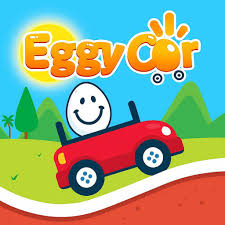
No dramatic trailers. No intense music. No promises of epic adventures. Just a simple screen, a small car, and a very fragile egg sitting on top like it has no idea what it’s about to go through.
I clicked play with zero expectations. I stayed much longer than planned. And by the end of the night, I realized I had been emotionally negotiating with a digital egg for far too long.
Why Casual Games Always Catch Me Off Guard
I play casual games because they feel honest. They don’t pretend to be more than they are. They don’t demand commitment, skill trees, or long tutorials. You show up, you play, you leave whenever you want.
At least, that’s the theory.
In reality, the best casual games gently trap you by making every failure feel fixable. Not unfair. Not random. Just close enough that you believe the next try will be better.
That belief is powerful. And that’s exactly what pulled me into Eggy Car.
First Impressions: “This Is Cute” (Famous Last Words)
The game started instantly. No instructions, no story, no noise. The car rolled forward, the egg wobbled slightly, and I immediately understood the goal.
Keep the egg on the car.
That’s it.
I remember smiling and thinking, “This is relaxing.”
I remember thinking, “This won’t take long.”
Then the egg fell off during my first run, and something strange happened.
I didn’t feel annoyed.
I felt challenged.
When You Realize the Game Is Watching You
The early runs were short and almost silly. I barely made progress. But every time I failed, I knew exactly why.
I pressed too hard.
I reacted too late.
I tried to correct something that didn’t need fixing.
The game wasn’t testing my reflexes — it was testing my self-control.
That’s when it started to feel personal.
Not in a negative way, but in a quiet, reflective way. Like the game was holding up a mirror and saying, “This is how you handle pressure.”
The Subtle Stress of Wanting to Do Better
There’s a unique kind of tension in this game. It doesn’t come from danger or speed. It comes from anticipation.
You see the hill coming.
You know it’s risky.
You prepare yourself.
And sometimes, you do everything right… and still lose.
Those moments hurt just a little — not because the game is cruel, but because you were so close.
I found myself holding my breath during long downhill sections, afraid that even blinking might cause the egg to fall.
The Funniest Losses Were the Most Quiet Ones
The game rarely ends in chaos. Most failures are gentle, almost polite.
The egg slides.
It pauses for a fraction of a second.
Then it leaves.
No sound. No drama.
I laughed more at those moments than at any big crash, because they felt absurdly human. Like the egg just decided it was done cooperating.
At some point, I stopped reacting with frustration and started reacting with amusement. That shift changed everything.
The Moment It Stopped Being About Distance
Early on, I cared about how far I could go. I wanted a “good run.” I wanted proof that I was improving.
But eventually, that stopped mattering.
I started playing for smoothness instead of progress. For balance instead of distance. For that satisfying feeling when the car and egg move as one.
Ironically, that’s when my runs started lasting longer.
Letting go of the goal made me better at reaching it.
A Few Personal Habits That Helped Me Survive Longer
After more attempts than I’d like to admit, I noticed some patterns in my own playstyle.
I Learned to Watch the Egg, Not the Terrain
The road doesn’t tell you when you’re in trouble. The egg does.
I Stopped Fighting Momentum
Trying to “fix” gravity almost always made things worse.
I Accepted That Some Runs Are Doomed
Not every mistake needs to be corrected. Sometimes it’s already over, and that’s okay.
These weren’t strategies I read anywhere — just lessons learned through repetition.
Why This Game Feels Fair Even When It’s Cruel
One thing I deeply respect about Eggy Car is how honest it is.
There are no tricks. No sudden spikes. No hidden mechanics. The rules never change.
If you fail, it’s because you made a decision — or reacted emotionally instead of calmly.
That kind of design builds trust. And when a game earns your trust, you’re more willing to fail repeatedly without feeling punished.
The Run That Gave Me False Hope
There’s always one run that lives rent-free in your head.
Everything felt perfect. My inputs were minimal. The car flowed naturally. The egg barely moved.
I reached a distance I’d never seen before and genuinely thought, “I’ve figured it out.”
That thought lasted about one second.
A tiny bump. A soft landing. The egg popped up, hovered, and rolled off calmly like it was making a point.
I stared at the screen, then laughed and restarted.
Because honestly — I deserved that.
When a Small Game Teaches a Big Lesson
I didn’t expect to learn anything from this experience, but I did.
I learned that patience is active, not passive.
That control doesn’t mean constant input.
That frustration doesn’t have to be loud to be meaningful.
Those lessons didn’t come from text or tutorials. They came from feeling, failing, and trying again.
That’s good game design.
Why Eggy Car Stays in My Rotation
I’ve closed the tab many times. I’ve told myself I’m done. But I keep coming back.
Not because I need to beat it — but because it gives me something rare: focus without pressure.
Eggy Car doesn’t overwhelm me. It centers me. It narrows my attention down to one simple task and lets everything else fade away.
Until the egg falls.
And then we start again.
Final Thoughts From a Casual Gamer Who Got Humbled (Again)
I didn’t expect a game this small to leave such a big impression. I didn’t expect to care about a digital egg’s well-being.

 English
 Arabic
 French
 Spanish
 Portuguese
 Deutsch
 Turkish
 Dutch
Dutch
 Italiano
 Russian
 Portuguese (Brazil)
 Greek
Greek